
The Heat Is On: Why Southeast Asia's Heatwave Is the Best Argument for Solar
公開済:
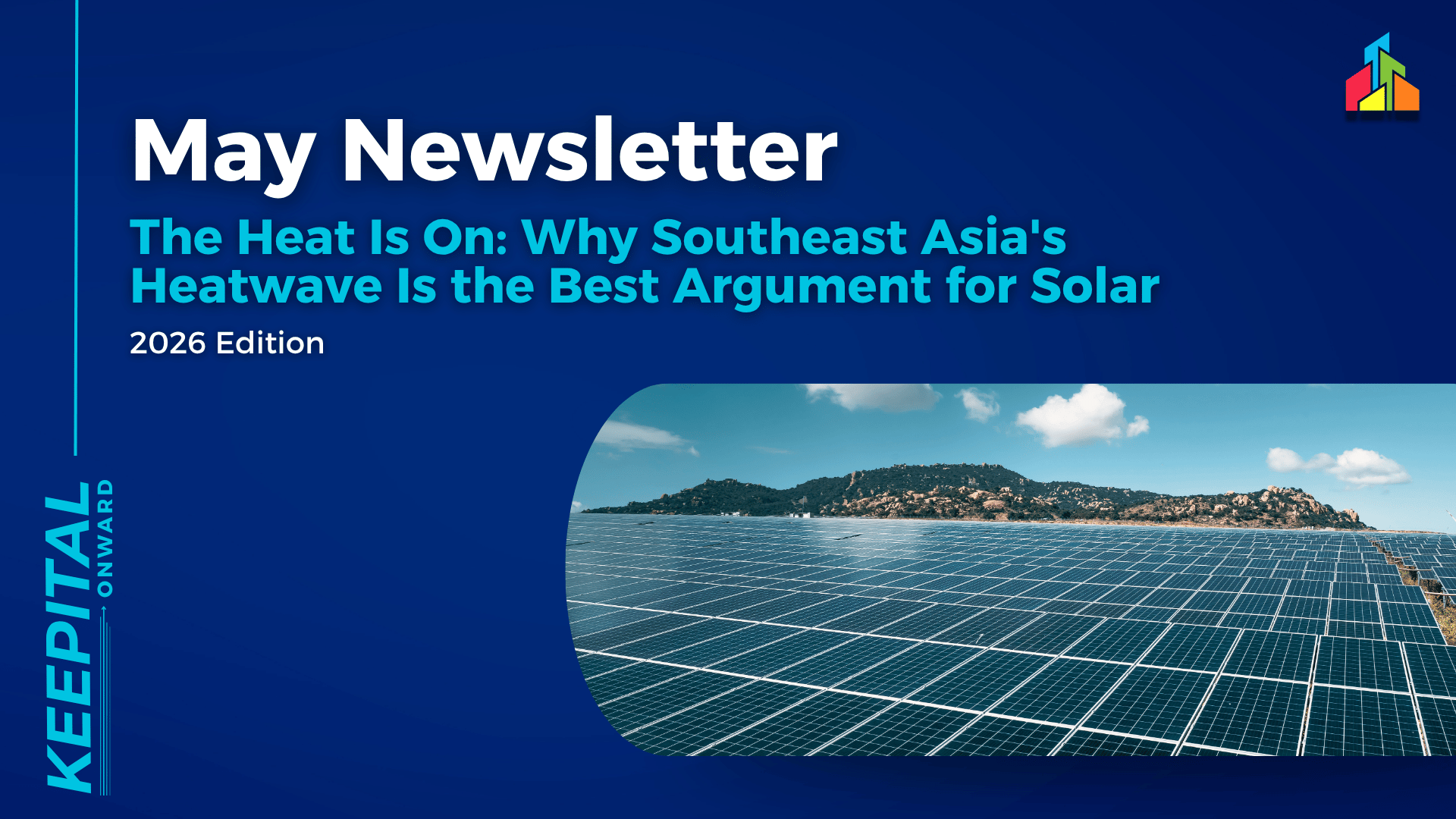
From the streets of Manila to the factory floors of Ho Chi Minh City and the industrial parks outside Bangkok, the heat lately has not just been uncomfortable. It has also been economically disruptive in ways that are forcing businesses, governments, and energy planners to rethink the region's energy future in real time. With all this, the uncomfortable truth sitting right beneath the surface is that the same sun making Southeast Asia nearly unbearable is also one of the most powerful, underutilized energy assets on earth.
The energy crisis gripping Southeast Asia in 2026 is the collision of three forces building simultaneously: a brutal heatwave, a global fuel supply shock, and a regional grid that was never designed for the demand it now carries. Temperatures across most of maritime and mainland Southeast Asia have been running above average throughout the March-to-May period. In Vietnam, provinces including Hanoi have seen temperatures soar past 42°C. In the Philippines, heat index readings in several areas climbed as high as 51°C. The timing has been particularly cruel as the ongoing conflict disrupting energy supply through the Strait of Hormuz sent fossil fuel prices surging at exactly the moment the region's grids needed the most. In fact, the Philippines became the first country in the region to declare a national energy emergency. Experts warn the dual pressure of extreme heat and tightening fuel supplies could escalate into broader economic consequences: inflation, supply disruptions, and constrained industrial output. This is not a risk scenario. It is the current operating environment.
The core vulnerability this crisis exposes is one analysts have warned about for years: Southeast Asia's deep dependence on imported fossil fuels leaves the region exposed every time global supply chains are disrupted. Oil, gas, and coal imports are priced and controlled by forces entirely outside ASEAN's hands.
What makes this particularly frustrating is that the alternative has never been more economically accessible. Solar panel costs have dropped by more than 90% since 2010, making solar one of the most cost-competitive sources of new electricity generation on earth. Southeast Asia sits squarely in the tropical sun belt. The resource is limitless and locally controlled. The region holds an estimated 20 terawatts of untapped solar and wind potential — roughly 55 times its current total power capacity. Even a fraction of that, if harnessed, would fundamentally change the region's energy security posture from price-taker to self-sufficient producer.
For manufacturers and industrial businesses in SEA, the implications are direct. Energy is not a cost that can be deferred. A factory that loses stable, affordable power loses output. In an environment where electricity prices are spiking and grid reliability is under strain, operators face a clear choice: absorb the risk, or move toward energy they control.
The case for industrial rooftop solar has never been stronger. Factories and warehouses have large roof surfaces, high daytime energy consumption that aligns naturally with peak solar generation hours, and a growing financial incentive to reduce grid exposure. A Japanese tire manufacturer in Thailand recently commissioned one of the world's largest factory rooftop solar installations at 22 MW, basically cutting an estimated 38,000 tons of carbon emissions annually while delivering real energy cost savings. Beyond cost, global brands sourcing from SEA suppliers are increasingly making renewable energy adoption a supplier qualification criterion, turning solar from a values statement into a competitive necessity.
The response to this crisis is already splitting industrial operators into two groups: those treating it as a temporary disruption to wait out, and those treating it as a structural signal to act on. The latter are locking in long-term Power Purchase Agreements with solar generators, insulating operations from the kind of price volatility the region is experiencing now. They are deploying rooftop solar with battery storage as a direct grid hedge. And in markets where Direct Power Purchase Agreement frameworks have been established, such as Thailand and Malaysia, manufacturers are beginning to procure renewable power directly from generators, bypassing the grid entirely for a portion of their consumption. Adding urgency: the EU's Carbon Border Adjustment Mechanism, now in force in 2026, means manufacturers exporting to Europe face direct financial exposure tied to their carbon footprint. Solar adoption is no longer just a cost tool, for businesses with European market exposure, it is becoming a trade competitiveness issue.
The heatwave baking Southeast Asia right now is a humanitarian challenge, an economic strain, and a very loud argument for moving faster. The sun causing so much disruption is the same resource that could make this region significantly more energy-secure, cost-competitive, and resilient to the next supply shock. The companies that recognize this now will be in a meaningfully stronger position when the temperature, and the market, shifts again.
Ready to Get Noticed?
Join the many ASEAN SMEs already taking advantage of this digital shift. Be discovered when buyers search. Turn visibility into real business.
Reach out today: ask@keepital.com | sales.ph@keepital.com | Schedule a meeting
Visit: www.keepital.com.ph | Facebook | Instagram | LinkedIn | TikTok
Join our community: B2B Business Networking
Company Information
Keepital was established in 2013 and has now grown into Southeast Asia's Leading industrial B2B marketplace that facilitates connections between suppliers and buyers worldwide through our online platform. They stand out with their highly competitive pricing and offer a comprehensive range of services beyond just product listings. Their advertising options are designed for affordability and simplicity, featuring a one-time payment and low renewal fees for product and service suppliers on our online portal.
Contact
Abigail Cubangbang
Brand Executive
marketing@keepital.com