
நாடு

மொழி

நாணயம்


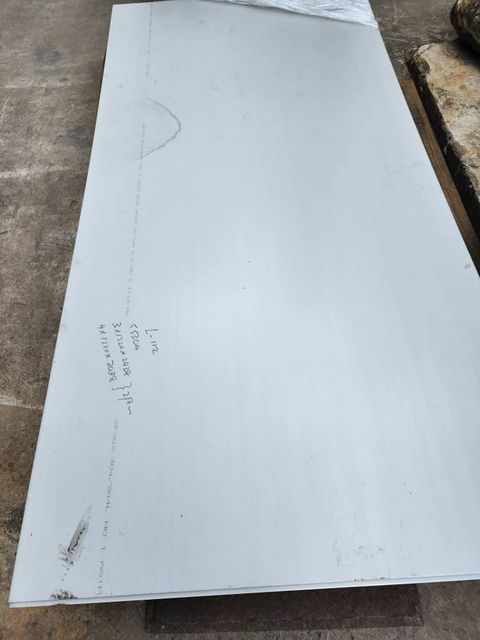
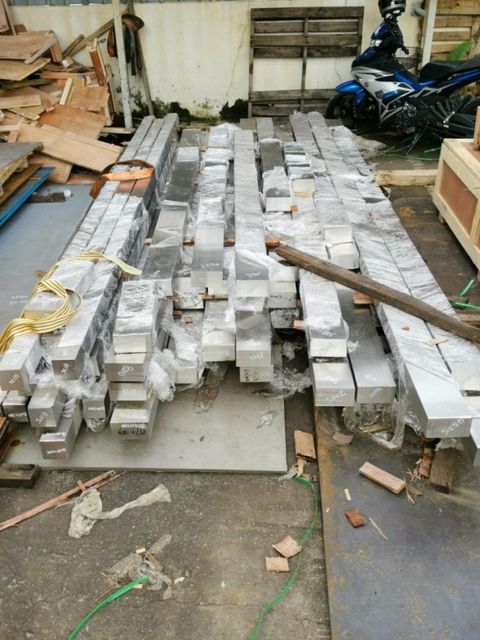
Stainless Steel 304 | SUS304 | SUS304L | Singapore Stainless Steel Supplier | UNS S30400

https://www.esteelsuppliers.com/new/shop/other-stainless-steel/stainless-steel-grade-304-uns-s30400-sus304-sus304l-ss304/

கடைசியாக புதுப்பிக்கப்பட்டது

விலை:

R.F.Q

What is SS304 / SS304L? SS304 and SS304L are chromium-nickel austenitic stainless steels widely used for general corrosion resistance, formability and weldability. 304L is the low-carbon version, with carbon limited to 0.03% maximum, which reduces sensitisation risk after welding. For environments with significant chlorides or salt exposure, 316/316L is often considered because it contains molybdenum and generally offers better pitting resistance. S U P P LY F O RM Plate | Full plate or cut engineering blanks.Hot-rolled and other finishes depend on stock and specification Round Bar | Full length or cut-to-length for shafts, pins, components and machining. Custom Pieces | Send grade, size, quantity, drawing requirement and machining allowance for quotation. Why does the “L” matter? The L means low carbon. 304L limits carbon to 0.03% maximum. Lower carbon reduces chromium-carbide precipitation during welding and therefore lowers the risk of intergranular corrosion in susceptible heat-affected zones. Physical characteristics Excellent ductility and toughness. Generally non-magnetic in solutionannealed condition. Cold work can create a measurable magnetic response. Good forming and welding characteristics Heat treatment 304/304L is not hardened by conventional heat treatment. A common solution-annealing range for bar is approximately 1040-1100°C followed by rapid cooling. Final requirements should follow the relevant material standard and process specification. Which grade should you choose? The two grades are closely related. The main purchasing difference is carbon control and how the material must perform after welding. Choose 304 when The drawing or purchase specification explicitly calls for 304 / S30400 / 1.4301. The application needs a general-purpose stainless steeel with good formability and corrosion resistance. Low-carbon chemistry is not a specific requirement of the design or welding procedure. Certification must state 304 rather than only 304L Choose 304L when The component will be welded, particularly in thicker sections. You want lower carbon to reduce sensitisation risk. Post-weld solution annealing is impractical. The drawing specifies 304L / S30403 / 1.4307. Can dual-certified 304/304L be used? Often yes, if the Mill Test Certificate demonstrates compliance with both requested grade requirements and the governing drawing, customer specification or code accepts dual certification. Do not assume interchangeability where a project specification explicitly restricts the grade or product standard Corrosion resistance & limitations Where 304/304L performs well Indoor and sheltered atmospheric exposure. Food and beverage processing equipment. Fresh water and many mild process environments. Architectural and general fabrication applications. Cleanroom, equipment frames and precision components. Storage tanks, vessels and general industrial hardware. Important limitations Not the first choice for continuous seawater or high-chloride exposure. Pitting and crevice corrosion can occur in chloride-bearing environments. Hot chlorides can create stress-corrosion cracking risk. Strong reducing acids and specific chemical media may require higher-alloy grades. Material selection should include temperature, concentration and cleaning regime. Typical SS304 / 304L applications Semiconductor & electronics | Equipment frames, cleanroom hardware, brackets, fixtures, process-support parts and precision-machined components. Food & beverage | Tanks, tables, processing machinery, shafts, fittings and hygienic equipment in suitable environments. Pharmaceutical | General process equipment, support structures and fabricated components where 304-class corrosion resistance is appropriate. Kitchen & commercial equipment | Food preparation equipment, counters, sinks, enclosures and fabricated stainless assemblies. Architecture & fabrication | Handrails, panels, trim, frames,indoor/outdoor components and general stainless fabrication. Precision engineering | Machined plates, bases, pins,shafts, jigs, fixtures and smallbatch engineered components. Machining note 304/304L work-hardens during machining. Use rigid setups, sharp tooling, suitable cutting parameters and adequate coolant. Avoid prolonged rubbing or dwell, which can harden the surface and make subsequent machining more difficult. Cut the stainless steel to the size you actually need Correctly sized machining blanks can reduce raw-material waste, handling and downstream machining time. Bandsaw Cutting Suitable for plate, blocks and round bar. Bandsaw cutting creates a mechanical cut without the broad heat-affected zone associated with thermal cutting processes. Circular Saw For suitable dimensions and material forms,circular-saw cutting can provide faster cutting and a more uniform sawn surface. Availability and achievable tolerance depend on the machine, dimension and job configuration. Machining allowance Do not assume one allowance fits every job. The required allowance depends on cutting process, blank size, flatness, final CNC process, finished tolerance and whether all faces will be machined. State the finished size in the RFQ so E STEEL can recommend an appropriate raw size. Common product standards ASTM A240 / ASME SA-240 - plate, sheet and strip. ASTM A276 / A479 - stainless bars and shapes / bars for specified applications. EN 10088 series - stainless steels, depending on product form. JIS G 4304 / related JIS standards - depending on product form. What to verify on the MTC Heat number matches material marking and delivery. Grade and product standard match the purchase order. Chemical composition is within specified limits. Mechanical test results meet the applicable standard. Heat treatment / delivery condition is suitable. Frequently asked questions 1. What is the main difference between SS304 and SS304L? Carbon content. 304 permits higher carbon, while 304L limits carbon to 0.03% maximum. The lower-carbon grade is commonly selected for welded fabrication to reduce sensitisation risk. 2. Is SS304L magnetic? Solution-annealed 304L is generally non-magnetic or only weakly magnetic. Cold forming, machining and deformation can produce a measurable magnetic response. 3. Can SS304 / 304L be hardened by heat treatment? No. Austenitic 304/304L is not hardened by conventional quench-and-temper heat treatment. Strength and hardness can increase through cold work. 4. Is SS304L suitable for seawater? 304L is not normally the first choice for sustained seawater or high-chloride service because pitting and crevice corrosion can occur. 316L, duplex or higher-alloy grades may be more appropriate depending on conditions. 5. Is 304L better than 304? Not universally. 304L is advantageous when low carbon is important, particularly after welding. 304 may be fully suitable where the drawing requires it and sensitisation is not a controlling concern. 6. Can E STEEL cut SS304 / 304L to custom size? Yes. E STEEL can supply full material and cut-to-size pieces. Send thickness × width × length for plate, or diameter × length for round bar, plus quantity and any machining allowance. 7. Does SS304 / 304L come with a Mill Test Certificate? Material can be supplied with EN 10204 3.1 MTC where applicable to the ordered stock. Verify heat number, grade, product standard and test values against the purchase requirement. 8. Is dual-certified 304/304L acceptable? It can be, when the MTC confirms compliance with both grade requirements and the drawing, customer specification or governing code accepts dual certification.

Share Product:

விவரம்

E Steel Sdn Bhd - A Leading Supplier of Stainless Steel SUS304 & SUS304L

Stainless Steel 304 / 304L (or known as SUS304 / SUS304L, UNS S30400)

Chemical Formula :

Fe, <0.08% | C, 17.5-20% | Cr, 8-11% | Ni, <2% | Mn, <1% | Si, <0.045% | P, <0.03% | S

----------

Background :

Grade 304 is the standard “18/8” stainless; it is the most versatile and most widely used stainless steel, available in a wider range of products, forms and finishes than any other. It has excellent forming and welding characteristics. The balanced austenitic structure of Grade 304 enables it to be severely deep drawn without intermediate annealing, which has made this grade dominant in the manufacture of drawn stainless parts such as sinks, hollow-ware and saucepans. For these applications, it is common to use special “304DDQ” (Deep Drawing Quality) variants. Grade 304 readily brakes or roll-formed into a variety of components for applications in the industrial, architectural, and transportation fields. Grade 304 also has outstanding welding characteristics. Post-weld annealing is not required when welding thin sections.

Grade 304L, the low carbon version of 304, does not require post-weld annealing and so is extensively used in heavy gauge components (over about 6mm). Grade 304H with its higher carbon content finds application at elevated temperatures. The austenitic structure also gives these grades excellent toughness, even down to cryogenic temperatures.

----------

Composition :

GradeCMnSi PSCrMoNiN
304min.-----18.0-8.0-
max.0.082.00.750.0450.03020.010.50.10
304Lmin.-----18.0-8.0-
max. 0.0302.00.750.0450.03020.012.00.10

----------

Mechanical Properties :

GradeTensile Strength (MPa) minYield Strength 0.2% Proof (MPa) minElongation (% in 50mm) minHardness (Rockwell B (HR B) max)Hardness (Brinell (HB) max)
3045152054092201
304L4851704092201

----------

Physical Properties :

GradeDensity (kg/m3)Elastic Modulus (GPa)Mean Coefficient of Thermal Expansion (μm/m/°C)Thermal Conductivity (W/m.K)Specific Heat 0-100°C (J/kg.K)Electrical Resistivity (nΩ.m)
0-100°C0-315°C0-538°Cat 100°Cat 500°C
304/L/H800019317.217.818.416.221.5500720

----------

Corrosion Resistance :

Excellent in a wide range of atmospheric environments and many corrosive media. Subject to pitting and crevice corrosion in warm chloride environments, and to stress corrosion cracking above about 60°C. Considered resistant to potable water with up to about 200mg/L chlorides at ambient temperatures, reducing to about 150mg/L at 60°C.

----------

Heat Resistance :

Good oxidation resistance in intermittent service to 870°C and in continuous service to 925°C. Continuous use of 304 in the 425-860°C range is not recommended if subsequent aqueous corrosion resistance is important. Grade 304L is more resistant to carbide precipitation and can be heated into the above temperature range.

Grade 304H has higher strength at elevated temperatures so is often used for structural and pressure-containing applications at temperatures above about 500°C and up to about 800°C. 304H will become sensitised in the temperature range of 425-860°C; this is not a problem for high-temperature applications but will result in reduced aqueous corrosion resistance.

----------

Dual Certification :

It is common for 304 and 304L to be stocked in “Dual Certified” form, particularly in plate and pipe. These items have chemical and mechanical properties complying with both 304 and 304L specifications. Such dual certified product does not meet 304H specifications and may be unacceptable for high-temperature applications.

----------

Applications :

  • Food processing equipment, particularly in beer brewing, milk processing & wine making.
  • Kitchen benches, sinks, troughs, equipment and appliances
  • Architectural panelling, railings & trim
  • Chemical containers, including for transport
  • Heat Exchangers
  • Woven or welded screens for mining, quarrying & water filtration
  • Threaded fasteners
  • Springs

விவரக்குறிப்பு

பெறக்கூடியது

விநியோக திறன்1000 Unit /
பெறக்கூடியதுகையிருப்பில் உள்ளது
0

பணவழங்கீடு

பணவழங்கீடு வரையறைதுரிதமான பரிமாற்றம், டெலிகிராபிக் பரிமாற்றம் (T/T), வங்கி பரிமாற்றம்,

பட்டியல் Download